

The World Health Organization (WHO) has just issued its first-ever global guideline for the prevention, diagnosis and treatment of infertility - a major step for reproductive health worldwide.
The guideline recognises infertility as a public health challenge that affects roughly one in six people of reproductive age globally. It sets out 40 evidence-based recommendations designed to make fertility care safer, fairer and accessible, as well as more affordable for public health funding.The guidance covers the full continuum: from prevention (e.g. raising fertility awareness; addressing lifestyle and risk factors), to diagnosis and treatment.
Guideline Recommends a People-Centred Approach
The new guidance emphasises a broad, inclusive and realistic definition of fertility care. Key elements include:
- Prevention and education: Encouraging early education about fertility and infertility risk factors (age, lifestyle, exposure to toxins, untreated infections) via schools, primary health care and reproductive-health services.
- Lifestyle and risk-reduction interventions: Recommending policies and practices to encourage a healthy diet, regular physical activity, stopping smoking, prevention and treatment of infections (e.g. STIs), to reduce the risk of infertility.
- Progressive clinical pathways: Starting with simpler, low-cost, low-invasiveness options - fertility counselling, advice on timing / fertile periods and then, where needed, progressing to more advanced treatments (e.g. intrauterine insemination or In Vitro Fertilisation), based on clinical need and patient preference.
- Psychosocial support: Recognition that infertility often carries emotional and social burdens - stress, stigma, anxiety, isolation - and a recommendation that fertility services include ongoing mental-health and psychosocial support.
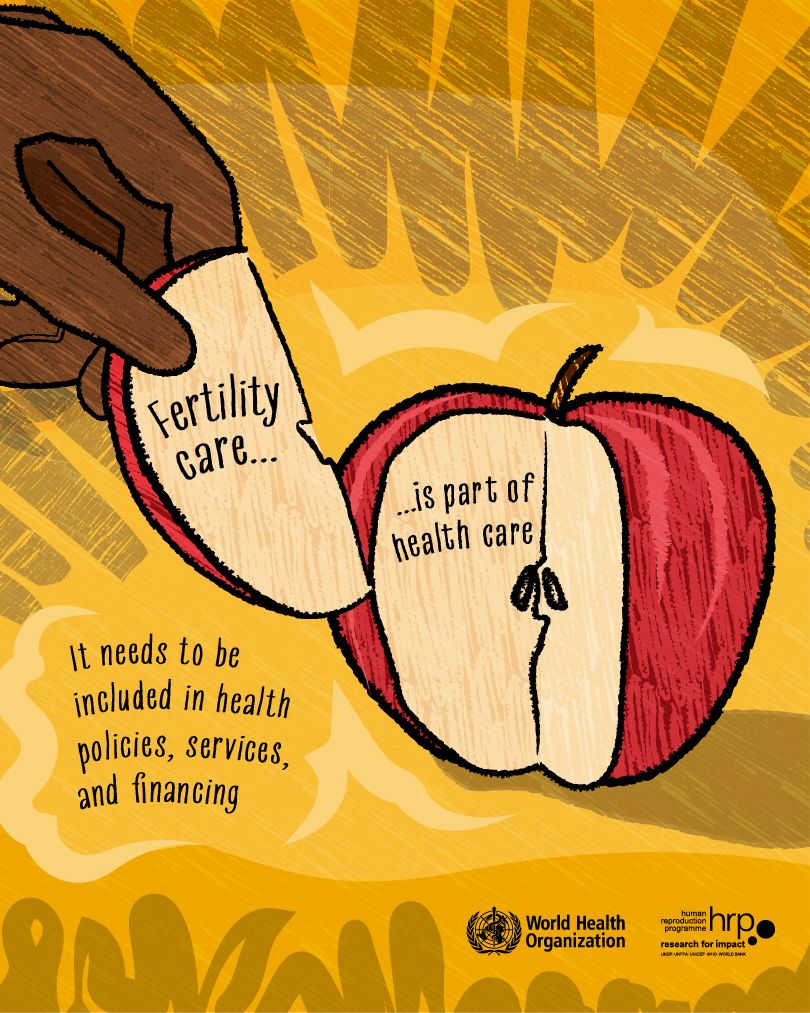
- Integration into national health systems: The guideline calls for fertility care to be embedded into national health strategies, public funding mechanisms and universal health coverage - not reserved only for those who can pay out-of-pocket.
Why This Matters for Reproductive Autonomy, Justice and Equality
At the heart of the WHO guideline is a commitment to gender equality, human rights and reproductive justice. As the WHO puts it: people everywhere should have the opportunity to make informed, individual decisions about whether, when and how many children to have.
For the mission of the Coalition for Fertility, this represents a critical step forward. The guideline aligns directly with the Coalition’s values:
- Reproductive autonomy by ensuring that fertility decisions are made freely, based on full and unbiased information, and supported by accessible, high-quality care.
- Reproductive justice by removing unjust barriers (financial, social, structural) that have historically excluded marginalised groups from fertility care: low-income, marginalised minorities, people with non-traditional family structures, single people, LGBTQ+ or intersex people.
- Equality of access by advocating for fertility care to be part of universal health coverage, not a luxury for those who can pay. This addresses the deeply inequitable global reality where fertility care is often prohibitively expensive or entirely unavailable.
By embracing these recommendations, national health systems can move from seeing fertility care as a luxury or afterthought to recognising it as an essential part of sexual and reproductive health, integral to human dignity, well-being and social justice.
What Needs to Happen
The publication of the WHO guideline is only the first step. For it to drive real change, and for fertility care to become truly universal, the following are essential:
- Policy adoption & adaptation: Countries must adopt or adapt the guideline within their own health and social systems, informed by local contexts, while upholding the core principles of equality and human rights.
- Public funding & financing: Fertility services - including prevention, diagnosis, treatment, and psychosocial support must be funded as part of public health systems.
- Public education & timely information: Widespread awareness campaigns needed about infertility, its causes, prevention, and availability of care - breaking taboos and reducing shame or silence around it.
- Inclusive care: Fertility care provision must be non-discriminatory - accessible irrespective of marital status, sexual orientation, gender identity, economic status, or other societal conditions.
- Support & advocacy: Civil society, patient groups, professional organisations - including the Coalition for Fertility have a crucial role advocating for implementation, accountability and continuous improvement.
A Milestone for Reproductive Equality - Call to Action
The new WHO guideline represents a landmark advancement in global reproductive health, putting infertility on the map as a legitimate, preventable, treatable health issue - not a private misfortune. For organisations like the Coalition for Fertility, it offers both a validation of our work and a powerful tool to push for systemic change.
We are proud that many representatives of the Coalition were participating in creating the guidelines. Klaudija Kordic (Fertility Europe) together with two other patient’s representatives were part of the Guidelines Development Group. Their involvement reminds us that fertility care must be rooted in real human needs. Nathalie Vermeulen (ESHRE) was part of the External Review Group, who peer reviewed the guidelines to ensure adherence to the best evidence.
By disseminating these guidelines, advocating for their implementation, and ensuring fertility care is rooted in human rights, we take a decisive step toward reproductive autonomy, reproductive justice, and equal access for all who need it - regardless of background, identity or income.
We urge policymakers, governments, health-care providers and civil society across Europe and globally to adopt and act on these recommendations without delay.